

Key Technology Trends for 2026: Driving Business Transformation
An analysis of the emerging technologies that will define the business landscape through 2026: generative AI, the metaverse, 5G and IoT, edge computing, blockchain and quantum cybersecurity.
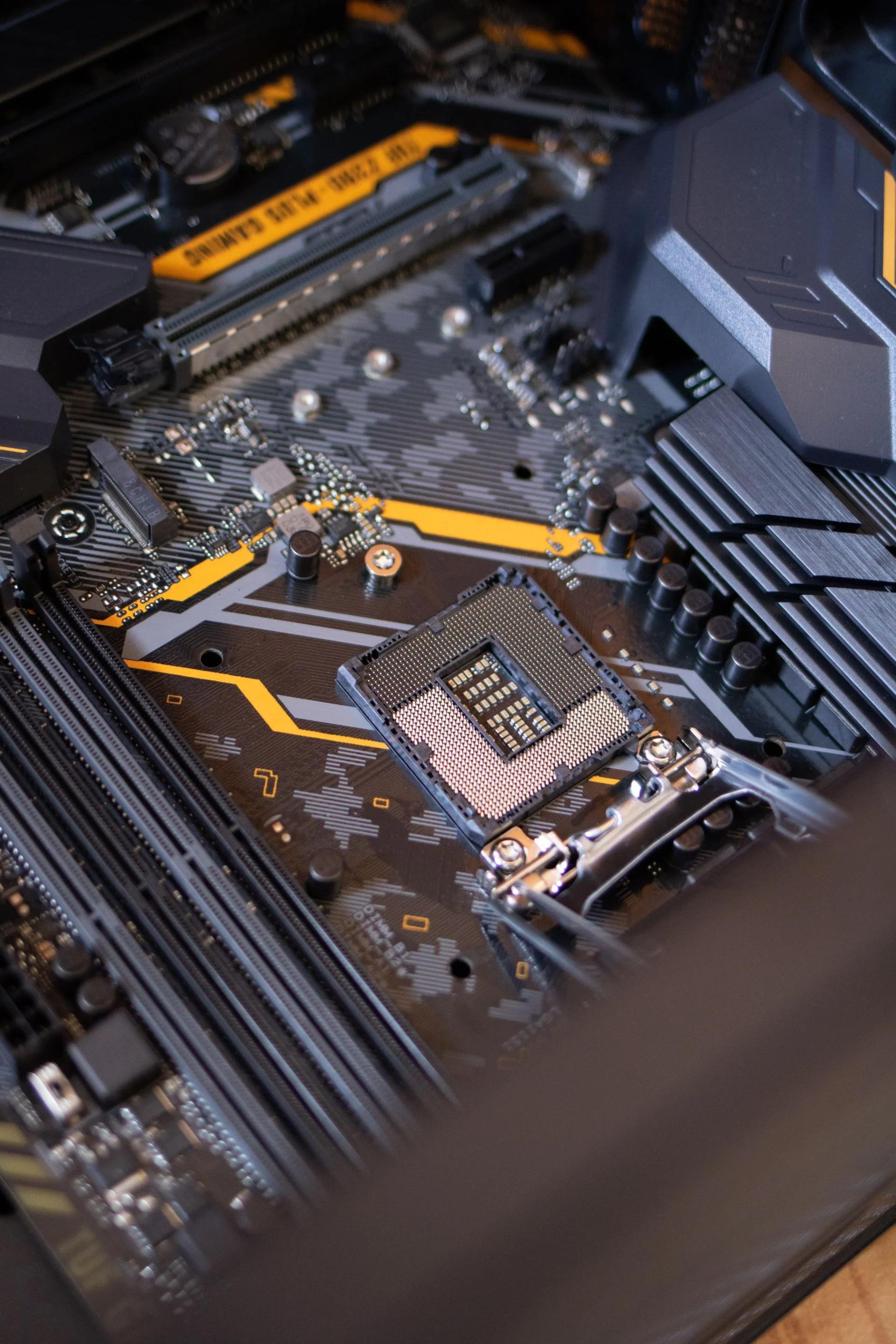
The global technology landscape is in a state of perpetual change, and the speed at which new technologies emerge and are adopted demands strategic anticipation from organisations. To stay competitive and remain relevant in an increasingly dynamic global market, companies cannot simply react; they have to foresee and actively adapt. Disruption has become the new constant in business.
The aim of this report is to provide a concise, clear view of the emerging technologies set to define the business landscape through 2026 and beyond. The analysis focuses on practical impact and strategic implications for the business, offering perspectives that allow leaders to make informed, strategic decisions rather than simply tracking technical progress.
The table below summarises the key technologies and their principal impact, serving as a quick reference for the busy executive.
Key emerging technologies for 2026 and their principal business impact
| Technology | Principal business impact | Key prediction for 2026 |
|---|---|---|
| Generative artificial intelligence (GenAI) | Large-scale task automation, content creation, new solutions. | More than 80% of companies will use GenAI in production. |
| Metaverse and virtual/augmented reality (VR/AR) | New customer experiences, immersive collaboration, digital monetisation. | Immersive technologies could generate between $4 and $5 trillion in value by 2030. |
| 5G and the Internet of Things (IoT) | Operational efficiency, predictive maintenance, enabling massive ecosystems. | Will connect thousands or millions of devices sharing data in real time. |
| Edge computing | Real-time data processing, optimised costs, improved privacy and security. | Double-digit growth over the next five years. |
| Blockchain | Transparency and trust across the value chain, transaction security, new decentralised business models. | The blockchain supply chain market will grow to $3.27 billion. |
| Quantum cybersecurity | Long-term data protection against quantum computing threats. | The need to rethink the cyber mindset as quantum computing matures. |
I. Artificial intelligence as the central axis of innovation
Artificial intelligence (AI) has established itself as the most significant driving force in digital transformation, permeating every facet of the business environment. Its evolution, particularly in generative AI, is redefining how organisations operate and strategise.
The rise of generative AI (GenAI) and its transformative impact
Generative AI, with widely recognised tools such as ChatGPT, Bard and DALL-E 2, is fundamentally transforming how people work and how companies operate. The technology is projected to add significant economic value to the global economy, with estimates reaching $4.4 trillion. That value derives not only from operational efficiency but also from GenAI's unprecedented ability to create innovative content, develop new solutions and optimise complex processes.
The pace of GenAI adoption is remarkable. Gartner predicts that by 2026, more than 80% of companies will already be using generative AI models or APIs, or will have deployed applications enabled by the technology in their production environments. This projection does not refer to mere experimentation or isolated proofs of concept, but to large-scale operational adoption — which underlines growing maturity and confidence in the technology's ability to deliver real value. The very high adoption rate projected for GenAI in production environments by 2026 suggests companies cannot afford to fall behind. That creates intense competitive pressure to integrate GenAI quickly into critical operations. Such integration will in turn require strategic, substantial investment in technology infrastructure, specialised talent development and robust governance frameworks that ensure effective, ethical and responsible AI implementation.
Integrating AI into business processes and decision-making
The standardisation and commercialisation of AI tools is pushing organisations to compete not only on developing superior algorithms but on how solidly they integrate AI into existing business processes. Trust in automated systems, and a clear understanding of what relying on AI actually entails, are becoming crucial to business success.
The practical applications of AI are vast and varied. In insurance, AI can accelerate claims processing, reducing dependence on manual labour and mitigating fraud risk by analysing data in real time and identifying anomalous patterns. In financial management, AI is fundamental to fraud detection and compliance automation, with AI-based RegTech reducing compliance costs at banks by up to 50%. AI-driven inventory optimisation can cut costs by up to 20% by analysing purchasing patterns and demand trends. AI also enables personalised customer recommendations, which drives sales and builds loyalty; an Accenture report indicates that 91% of consumers are more likely to buy from brands that offer them relevant recommendations. Automating administrative tasks with AI can reduce the time spent on them by up to 20%, freeing resources for strategic work. In marketing, designing automated, personalised campaigns with AI can generate revenue increases of up to 760% with precise segmentation.
One emerging trend is the growing "physicality" of AI, with manufacturers developing a new generation of chips that embed AI models directly into computers and edge devices for localised, offline use — which significantly strengthens the Internet of Things (IoT). The application of AI goes well beyond automation and operational cost reduction. The examples of personalised recommendations and marketing campaigns show that AI is a fundamental strategic tool for deepening customer relationships, anticipating needs and generating more targeted, meaningful revenue growth. This turns AI from a cost centre into an engine of value and competitive differentiation, with a direct impact on the top line.
Key challenges in implementing AI
Despite its immense potential, implementing AI in business faces significant challenges. Fragmented or outdated data infrastructure is identified as the biggest obstacle, since it makes it hard to feed AI models with structured, high-quality information. The shortage of technology talent remains a global concern; Germany, for example, is projected to be short of nearly 800,000 technology specialists by 2026, and millions of cybersecurity roles were already unfilled in 2020.
Managing a mixed workforce of humans and AI agents also requires new skills from human resources departments. This includes developing methods to acquire, train and evaluate human talent in higher-level roles, as well as rigorous oversight of "digital workers" to prevent unexpected or harmful behaviour.
There is a paradox between innovation and technical debt. Despite rapid progress and growing investment in AI, technical debt is projected to reach moderate or high severity for 75% of technology decision-makers by 2026. This suggests that the pace of AI adoption, if not accompanied by a solid data foundation and architecture, can generate new layers of complexity and legacy problems. That makes modernising the technology core and implementing AI governance platforms more critical than ever, in order to ensure the long-term sustainability of AI initiatives and prevent investments from creating more problems than they solve.
II. The resurgence of the metaverse and immersive experiences
The concept of the metaverse and its associated immersive technologies — virtual reality (VR) and augmented reality (AR) — are experiencing a notable resurgence, moving from a subject of speculation to a tangible frontier with concrete business applications and significant monetisation potential.
The evolution of VR and AR in business
Deloitte anticipates a fundamental paradigm shift in how people interact with the digital world. Reliance on traditional rectangular screens is expected to decline as immersive virtual interfaces, such as the metaverse, become a new way of connecting with reality. Although initial interest in the metaverse fluctuated, investors have maintained steady optimism, reflected in a rebound in VR headset sales after a decline in 2022. McKinsey's research reinforces this view, estimating that immersive technologies could generate between $4 and $5 trillion in value by 2030 — a strong signal of the concept's resurgence.
In the Spanish market, total VR revenue is projected to rise from €49 million in 2023 to €87 million in 2028, representing annual growth of 12.4%. That growth will be driven primarily by VR video, with a compound annual growth rate (CAGR) of 22.6%, and VR gaming, with a CAGR of 6.5%. This resurgence of the metaverse, backed by significant investment and long-term value projections, indicates the technology is moving past the initial hype phase and demonstrating concrete, profitable business use cases. It validates investment in immersive experiences as a legitimate, strategic business channel rather than pure entertainment.
Use cases in collaboration, marketing, training and new revenue streams
Companies are actively building business models and immersive environments designed to streamline operations, encourage collaboration between employees and improve learning. These virtual environments offer a new canvas for interaction and value creation.
There are concrete examples across sectors. In marketing, companies are exploring advertising on virtual billboards, hosting immersive events and partnering with metaverse influencers. The fashion industry has been a pioneer, with brands such as Gucci, Vans and Adidas selling virtual items and non-fungible tokens (NFTs) inside these environments. Nike, for example, has generated a quarter of its total revenue from digital business and $185 million from its NFT collections, demonstrating the considerable monetisation potential of these environments. The food industry is also moving in, with McDonald's and Starbucks exploring virtual restaurant concepts and NFT-based loyalty programmes. In industrial training, immersive simulation is a key application — such as using Nvidia Omniverse to create digital twins that allow realistic, safe training. The success of established brands such as Nike, Adidas, McDonald's and Starbucks in generating revenue and loyalty through virtual goods and NFTs shows that the metaverse is not merely a space for interaction but a viable, lucrative platform for monetisation and brand building. This opens the door to new business models based on the digital ownership economy and immersive experiences, transforming the relationship between brands and consumers.
Considerations on investment, security and user adoption
Despite the potential, entering the metaverse and adopting immersive technologies carries significant challenges. The high upfront investment required in VR/AR hardware, specialised software development and robust infrastructure remains a considerable barrier, particularly for small and medium-sized businesses.
Concerns about data privacy and security are paramount, with risks of breaches, identity theft and the emergence of new forms of cyberattack such as "3D social engineering". In this type of attack, fraudsters use three-dimensional avatars designed to imitate recognisable companies, tricking victims into sharing confidential information or interacting with fraudulent smart contracts. Technical challenges also persist, including scalability to handle millions of simultaneous users, interoperability between the various metaverse platforms and the learning curve for users unfamiliar with these technologies.
The high investment costs and inherent security risks in immersive environments suggest that companies should adopt a gradual, carefully planned strategy for entering the metaverse. That includes prioritising cybersecurity from the design stage, investing in user education about new risks and seeking solutions that improve interoperability and accessibility to encourage broader, safer adoption. Building trust through robust security measures and friendly interfaces will be fundamental to long-term success and widespread adoption.
III. Advanced connectivity (5G/6G) and the Internet of Things: the foundation of interconnection
Advanced connectivity, driven by fifth- and sixth-generation networks (5G and 6G) together with the Internet of Things (IoT), constitutes the fundamental infrastructure that enables massive device interconnection and the spread of intelligence throughout business environments.
The role of 5G/6G networks in enabling massive IoT ecosystems
Advances in connectivity such as 5G/6G networks and the WiFi 6 and 7 standards are being rapidly adopted by organisations because of the significant gains in productivity and efficiency they offer. These technologies provide the massive bandwidth and ultra-low latency needed to support an explosion of data generated by interconnected devices.
The combination of 5G and IoT is crucial, since it allows a significantly larger number of users and devices to be connected compared with earlier generations such as 4G/LTE. That capacity is essential to developing massive IoT — an environment where thousands, or even millions, of "things" can be connected and sharing data in real time. The high capacity and bandwidth of 5G are therefore crucial to large-scale deployment of IoT and AI at the network edge. Without this advanced, low-latency connectivity infrastructure, the potential of AI and IoT for real-time decision-making and intelligent automation in distributed environments would be severely limited. Connectivity thus becomes the indispensable backbone of the ambient intelligence driving the next wave of business transformation.
Synergies between AI, IoT and 5G to optimise operations and predictive maintenance
The synergistic combination of artificial intelligence, the Internet of Things and 5G networks is giving rise to innovative business models, optimising processes and significantly reducing operating costs. This integration allows a holistic, real-time view of business operations.
In manufacturing, IoT has enabled the implementation of digital twins — virtual replicas of machines and processes. These digital twins allow simulations and adjustments in real time, which translates into substantially improved efficiency and reduced costs. Interconnecting smart devices through IoT, powered by 5G's speed and low latency and analysed by AI, allows companies to monitor products and assets in real time, manage inventory more efficiently and — crucially — predict failures before they happen. This predictive failure detection is a direct result of combining IoT data with AI analysis. It transforms operations from a reactive model (fixing problems after they occur) to a proactive one (preventing problems before they happen), which delivers significant savings, improves safety and increases operational uptime — all critical to competitiveness.
Transformative applications in key sectors
The convergence of AI, IoT and 5G is generating transformative applications across a wide range of sectors, redefining both operations and safety.
Smart factories: In manufacturing, dozens of robots connected wirelessly by 5G can move between production lines, lift heavy objects and select the right components. Fleets of automated guided vehicles (AGVs) navigate the factory without collisions, while hundreds of thousands of cameras, supported by AI models on edge servers, monitor product assembly and detect defects automatically, operating with a high degree of automation.
Safer construction sites: 5G technology helps map danger zones on the worksite, enables real-time video monitoring to detect weather changes that could affect a project, and allows specialised bots to inspect places that are hard to reach or dangerous for humans. AI-powered computer vision, enabled by 5G, can also monitor equipment, detect intrusion or theft, and even verify whether workers are using their safety gear.
More efficient commercial transport: Fleets of 5G-connected commercial vehicles share data about traffic and road conditions with the cloud, allowing AI to optimise routes almost in real time, reducing journey times and fuel costs. In the near future, AI-directed autonomous fleets are expected to relieve the burden on drivers, who could become remote operators.
Better health outcomes for patients: In healthcare, the Internet of Medical Things (IoMT), enabled by 5G and AI, collects and analyses data on vital functions, patient behaviour and device usage. This allows providers to intervene and adjust treatments predictively, avoiding emergency visits and hospitalisations. In the longer term, data collected by 5G-compatible devices can feed AI models that help researchers recognise trends and anomalies, allowing providers to treat patients faster.
The detailed examples in manufacturing, construction, transport and healthcare show that the combination of 5G, AI and IoT is not limited to technology or digital companies: it is profoundly reshaping "physical" and traditional industries. No industry is exempt from the need to adopt these synergies in order to achieve operational efficiency, improve safety and stay competitive in a constantly evolving market.
IV. Hybrid cloud strategy and the expansion of edge computing
Managing digital infrastructure has grown increasingly complex, pushing companies to adopt hybrid cloud strategies and expand their use of edge computing to optimise data processing, security and operational efficiency.
Multicloud management and the "supercloud" concept for simplifying complexity
Faced with the growing complexity of multicloud environments, where organisations use multiple cloud providers, some companies are opting for a metacloud or supercloud solution. This consists of an abstraction and automation layer that simplifies the management of common services — storage, compute, AI, data, security, governance and application development — across different cloud environments. The approach aims to improve governance and streamline application development in a fragmented ecosystem.
The consolidation of cloud as the foundation of enterprise digital strategy is undeniable. By 2026, 75% of organisations are projected to adopt a cloud-based digital transformation model as their fundamental underlying platform. The emergence of superclouds and the widespread adoption of cloud-based transformation models signal a maturing of the cloud paradigm. Companies are seeking not only the flexibility and scalability cloud offers but also solutions that manage its growing complexity and fragmentation, guaranteeing governance, security and efficiency in hybrid and multicloud environments. This is a direct response to the operational challenges of large-scale deployments.
The expansion of edge computing as a strategic complement
Edge computing, which distributes workloads to multiple locations close to users, is gaining ground as a strategic complement to cloud computing. This architecture allows faster data processing, which improves business productivity while also strengthening data privacy and security by processing data closer to its source. McKinsey predicts double-digit growth for edge computing over the next five years, underlining its growing importance.
The expansion of edge computing is intrinsically tied to the need to process large volumes of data generated by IoT and AI applications in real time. By 2025, edge computing is expected to become a fundamental element of enterprise AI innovation. As AI applications grow more sophisticated and data-hungry, relying solely on cloud-based architectures can become prohibitively expensive for many organisations. Processing data locally at the edge mitigates the cost volatility associated with cloud transfer, storage and compute, which can escalate dramatically given AI's heavy CPU and GPU demands.
Industrial success stories and digital interconnection
Edge computing is driving transformation across industries with tangible success stories. In retail, it allows stores to use AI for real-time inventory management, customer behaviour analysis and security monitoring, all without incurring excessive cloud costs. In manufacturing, where IoT devices and sensors monitor equipment health, edge processing enables predictive maintenance while reducing latency and cloud dependency. One concrete example is the EIDER project, a multi-year strategic collaboration (2024–2026) in the Basque Country that aims to deploy edge computing capabilities across the medium- and low-voltage electricity grid to increase visibility and control.
The interconnection of digital infrastructure is another crucial aspect. One global report predicts that by 2026, 80% of companies will design and manage new digital infrastructure using subscription-based services, indicating a shift towards more flexible, scalable consumption models. Madrid, for instance, is positioning itself as a leader in edge interconnection bandwidth, with projected growth of 39% CAGR by 2026, driven by its proximity to submarine cable landing points. Edge computing adoption is emerging as a fundamental element of both AI innovation and cost predictability. The shift towards the edge is driven by the need for real-time AI processing and by the need to manage rising cloud costs for data-intensive AI applications. That makes the edge a critical component of scalable, economically viable AI deployments, particularly in industrial environments where latency and autonomy are key.
V. Blockchain: trust, transparency and decentralisation
Blockchain technology, known for its ability to create immutable, decentralised records, is moving beyond its initial association with cryptocurrencies to become a fundamental pillar in building trust and transparency in business — especially across the supply chain.
Blockchain's role in creating trust and transparency
Blockchain-driven ecosystems are becoming essential to generating trust in the digital sphere. The technology, based on a distributed ledger in which transactions and data are recorded across multiple nodes, guarantees the immutability and security of information. Blockchain's decentralised architectures disintermediate trust, removing the need for intermediaries and enabling a less centralised internet through Web3.
By 2026, the blockchain supply chain market is expected to grow to a solid $3.27 billion, with a compound annual growth rate (CAGR) of 53.2%. This exponential growth stems from blockchain's promise of improved traceability, efficiency and security in supply chain management. Blockchain's ability to establish trust between supply chain participants, by providing transparent access to critical data points, instils confidence in commercial transactions without the need for intermediaries.
Applications in the supply chain and beyond
Applying blockchain to the supply chain is an area of significant growth, addressing critical challenges such as traceability, risk management and sustainability.
Traceability and transparency: Blockchain makes it possible to map and visualise every step of the supply chain, from origin to point of sale. Notable examples include the collaboration between Maersk and IBM to digitise logistics workflows and track shipments end to end, resulting in greater efficiency. Walmart also uses blockchain to let customers scan products in store and get immediate information about their origin and logistics history. Ford, for its part, promotes transparency across its supply chain to offer high-quality products and maintain ethical sourcing practices.
Financial management and smart contracts: Blockchain can significantly improve financial management in supply chains by offering faster, more secure and more cost-effective solutions for cross-border transactions. Smart contracts — sections of code in a block that automatically update actions when specific conditions are met — streamline administrative procedures and improve transaction speed.
Sustainability and the circular economy: Blockchain technology is key to sustainability and the circular economy, since it allows products and materials to be tracked throughout their life cycle, which facilitates compliance with environmental, social and governance (ESG) criteria and promotes sustainable practices.
New business models: Beyond the supply chain, blockchain is transforming security and transparency in financial transactions and data management, opening up new business opportunities.
Adopting blockchain promises to turn supply chains into more trustworthy and efficient systems. In sectors such as food and fashion, where consumers increasingly demand information about the products they buy, the technology is becoming a key piece.
Challenges and future opportunities
Despite its promise, implementing blockchain at scale still faces challenges, including technical complexity, interoperability between different networks and the need for clear regulatory frameworks. Nevertheless, its ability to generate trust, improve transparency and optimise processes positions it as a disruptive technology with growing impact on the business landscape through 2026 and beyond.
VI. Cybersecurity: an imperative in the digital era
Cybersecurity has become a fundamental business imperative in the digital era, especially with the proliferation of emerging technologies such as AI, the metaverse and quantum computing. Protecting data and staying resilient against constantly evolving threats are crucial to business continuity and trust.
The evolution of threats and the need for proactive cybersecurity
The cyber threat landscape is increasingly complex and sophisticated. As cyberattacks rise, artificial intelligence plays a key role in detecting and preventing threats in real time. Security companies have developed algorithms that identify suspicious patterns and protect organisational data.
However, quantum computing's progression towards maturity poses a significant challenge to current cybersecurity practice. Quantum computing is expected to render today's cryptographic methods vulnerable, which will require organisations to rethink their cyber mindset and adopt new approaches. This includes post-quantum cryptography (PQC) — cryptographic methods designed to guarantee security against the potential threats posed by quantum computers, protecting valuable intellectual property and sensitive data.
Specific risks in emerging environments such as the metaverse
Adopting immersive environments such as the metaverse introduces new and complex attack surfaces for cybercriminals.
3D social engineering: Fraudsters are employing tactics such as "3D social engineering", approaching victims by imitating known domains and taking the form of 3D avatars designed to resemble recognisable companies, with the aim of inducing people to share confidential information or access credentials.
Fraudulent messages and malicious airdrops: Fraudulent messages — ranging from fake websites and social media accounts to deceptive emails — are effective tactics for tricking victims into clicking malicious links or interacting with counterfeit smart contracts. Malicious airdrops and giveaways, in which fraudsters offer fake tokens or NFTs, are used to gain full access to victims' digital assets.
Phishing and private key theft: Phishing remains a persistent threat, with fraudsters creating replicas of legitimate websites to ask users for their private keys, which allows them to take control of digital wallets and associated assets.
The high upfront investment and inherent security risks in immersive environments suggest companies should adopt a gradual, well-planned strategy for entering the metaverse. That includes prioritising cybersecurity by design, investing in user education about new risks and seeking solutions that improve interoperability and accessibility to encourage broader, safer adoption. Building trust through robust security measures and friendly interfaces will be fundamental to long-term success and widespread adoption.
Technology talent and cybersecurity
The shortage of cybersecurity professionals is a critical challenge. Globally, more than three million cybersecurity roles were unfilled in 2020. This talent gap exacerbates security risks and underlines the need to rethink technology talent, encouraging flexibility and continuous training in order to attract and retain qualified professionals.
Digital security and cybersecurity, especially with the rise in cyberattacks, are an area where AI plays a key role in detecting and preventing threats in real time. Integrating AI into enterprise architecture drives profound changes towards an optimised experience, although complex foundations are required to make simplicity possible when modernising the core. That includes transforming software development, improving cybersecurity and accelerating data modernisation.
Conclusions
The technology landscape for 2026 is shaping up as an era of profound business transformation, driven by the convergence and maturation of key technologies. Artificial intelligence — particularly GenAI — is not merely an efficiency tool but an engine of value and competitive differentiation, redefining productivity and customer interaction. Its rapid operationalisation in production environments demands strategic investment and robust governance to avoid growing technical debt.
The metaverse, far from being a passing concept, is demonstrating tangible business utility, opening new routes to monetisation and new brand models through immersive experiences. Its successful adoption, however, will depend on a gradual strategy that prioritises investment in security and overcomes barriers of accessibility and scalability.
Advanced connectivity (5G/6G) and the Internet of Things form the backbone of this interconnection, enabling ubiquitous intelligence that transforms entire physical industries, from smart factories to healthcare. This synergy allows a fundamental shift from reactive to proactive operations, improving resilience and operational efficiency.
Finally, hybrid cloud strategy and the expansion of edge computing are essential to managing digital complexity, optimising costs and enabling real-time data processing — crucial to deploying AI in distributed environments.
Taken together, these trends underline the need for companies to adopt a holistic, strategic approach to technology. Investment should not be limited to acquiring tools; it must extend to modernising data infrastructure, developing specialised talent and implementing solid governance frameworks. Organisations that manage to integrate these technologies effectively and ethically will be better positioned to thrive in a constantly evolving business world, turning challenges into opportunities for growth and leadership.